
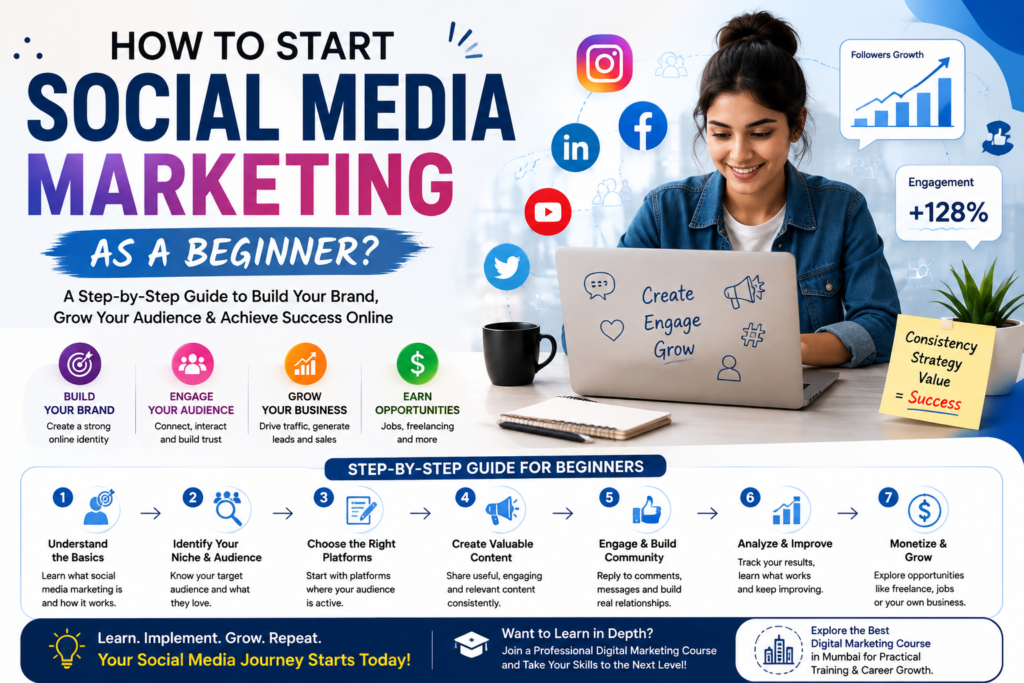
Social media has transformed the way people communicate, shop, and interact with brands. Today, businesses of all sizes—from startups and local shops to global companies—use platforms like Instagram, Facebook, LinkedIn, and YouTube to build their online presence, engage with customers, and generate sales. As a result, social media marketing has become one of the most in-demand digital skills across industries.
If you’re wondering how to start social media marketing as a beginner, you’re not alone. Many students, housewives, business owners, and small business owners are exploring this field because it offers flexible career opportunities, freelance income, and business growth. The good news is that you don’t need years of experience or a technical background to get started. With the right learning path and consistent practice, anyone can develop social media marketing skills.
One of the most effective ways to build a strong foundation is by enrolling in a digital marketing course in Mumbai, where you can gain hands-on experience with real-world tools, live projects, and industry best practices. However, before choosing a course, it’s important to understand what social media marketing is, why it’s valuable, and how beginners can learn it step by step.
This guide provides a neutral, third-party overview to help you understand the fundamentals of social media marketing, the skills you need, the platforms you should focus on, and the career opportunities available in this growing industry.
Table of Contents
- What is Social Media Marketing?
- Why Should Beginners Learn Social Media Marketing?
- How to Start Social Media Marketing as a Beginner?
- Which Skills Are Required for Social Media Marketing?
- Which Social Media Platforms Should Beginners Learn First?
- How Does a Digital Marketing Course in Mumbai Help?
- Essential Social Media Marketing Tools
- Common Mistakes Beginners Should Avoid
- Career Opportunities
- FAQs
What is Social Media Marketing?
Social Media Marketing (SMM) is the process of promoting a business, product, service, or personal brand through social media platforms. It involves creating valuable content, engaging with audiences, running paid advertisements, and analyzing campaign performance to achieve specific business goals.
Unlike traditional advertising, social media marketing enables businesses to interact directly with customers, receive feedback, and build long-term relationships. Whether the objective is to increase brand awareness, generate leads, drive website traffic, or boost sales, social media plays a crucial role in modern digital marketing strategies.
A comprehensive digital marketing course in Mumbai typically includes social media marketing as one of its core modules, helping learners understand both organic and paid marketing techniques.
Key Objectives of Social Media Marketing
- Increase brand visibility
- Build customer trust
- Generate quality leads
- Drive website traffic
- Improve customer engagement
- Increase online sales
- Build a loyal community
- Enhance customer support
For beginners, understanding these objectives is the first step toward creating effective marketing campaigns.
Why Should Beginners Learn Social Media Marketing?
Social media marketing is one of the most accessible and rewarding digital skills to learn. With billions of active users across platforms, businesses are constantly looking for professionals who can create engaging content and manage online communities.
Whether your goal is to secure a job, grow your business, or start freelancing, social media marketing offers numerous opportunities.
1. High Demand Across Industries
Companies in retail, healthcare, education, real estate, hospitality, finance, and e-commerce all rely on social media to connect with their audiences. This creates a steady demand for skilled social media marketers.
By combining social media expertise with a digital marketing course in Mumbai, beginners can build job-ready skills that are valued by employers.
2. Excellent Career Opportunities
Social media marketing opens doors to various roles, including:
- Social Media Executive
- Social Media Manager
- Digital Marketing Executive
- Content Creator
- Community Manager
- Influencer Marketing Executive
- Performance Marketing Executive
- Brand Strategist
- Freelance Social Media Consultant
As businesses continue investing in digital channels, these roles are expected to remain in demand.
3. Flexible Learning and Working
One of the biggest advantages of social media marketing is flexibility. Many professionals work remotely, freelance, or manage multiple clients from home.
This makes it an attractive option for:
Students
Students can develop practical skills alongside their education and improve their employability before graduation.
Housewives
Housewives looking to restart their careers or earn from home can manage social media accounts, create content, or offer freelance marketing services with flexible schedules.
Business Owners
Entrepreneurs can use social media to promote products, communicate with customers, and generate leads without depending entirely on traditional advertising methods.
Small Business Owners
Local businesses can leverage platforms like Instagram and Facebook to reach nearby customers, announce offers, and build a loyal customer base.
Why is Social Media Marketing Important in Digital Marketing?
Social media marketing is more than just posting images or videos. It is a strategic approach to building relationships with customers and achieving measurable business outcomes.
Some of the key benefits include:
Increased Brand Awareness
Regular posting and audience engagement help businesses become more recognizable in their target market.
Cost-Effective Marketing
Compared to traditional advertising, social media campaigns often require a smaller budget while offering detailed targeting options.
Better Customer Engagement
Businesses can respond to questions, collect feedback, and build trust through direct interactions with followers.
Data-Driven Decisions
Platforms like Facebook, Instagram, and LinkedIn provide analytics that help marketers understand audience behavior and improve future campaigns.
Which Social Media Platforms Should Beginners Know?
Each platform serves a different purpose. Beginners should understand the strengths of each before creating a strategy.
Facebook remains one of the largest social media platforms, making it valuable for businesses targeting diverse age groups.
Beginners should learn:
- Business Page Setup
- Content Publishing
- Community Engagement
- Facebook Groups
- Meta Business Suite
- Facebook Ads Basics
Instagram is ideal for visual storytelling and brand building.
Important topics include:
- Reels
- Stories
- Carousels
- Hashtag Research
- Content Planning
- Influencer Collaborations
- Instagram Insights
Instagram is especially popular among fashion, food, fitness, beauty, education, and lifestyle brands.
LinkedIn focuses on professional networking and B2B marketing.
Beginners should understand:
- Personal Branding
- Company Pages
- Thought Leadership
- Lead Generation
- LinkedIn Content Strategy
- Networking Best Practices
It is one of the most effective platforms for professionals and service-based businesses.
YouTube
Video content continues to dominate online marketing.
Key learning areas include:
- Channel Optimization
- Video SEO
- Thumbnail Design
- Shorts Strategy
- Audience Retention
- YouTube Analytics
Educational creators, coaches, and businesses use YouTube to build authority and attract long-term traffic.
WhatsApp Business
Many local businesses now use WhatsApp to communicate directly with customers.
Beginners should learn:
- Business Profile Setup
- Product Catalogs
- Broadcast Lists
- Customer Support
- Automated Messages
Pinterest helps drive website traffic through visual search.
It works particularly well for:
- Home Decor
- Fashion
- Recipes
- DIY Projects
- Travel
- Blogging
X (formerly Twitter)
X is useful for:
- Real-time updates
- Industry discussions
- Brand announcements
- Customer support
- Trending conversations
Why Should You Learn Through Practical Training?
While free online resources can teach the basics, practical experience is essential for developing real-world skills. A well-designed digital marketing course in Mumbai often includes live projects, campaign creation, analytics, and portfolio-building exercises that help beginners apply what they learn.
Working on real campaigns allows learners to understand audience behavior, create engaging content, interpret performance metrics, and improve results over time. These practical skills are highly valued by employers and clients alike.